Rental Partner: Skye Hughes presents
for posterity: proof of free will
a panel discussion on the end of humanity


Town Hall Seattle and UW Engage present
Sierra Gillman and Emma Modrick
EVENT NOTES
Doors for this event will open at 5:00 PM. This event is approximately 90 minutes long.

Hear from UW students about research on the hidden drivers behind shifting marbled murrelet populations and viewing monsoon seasons from the perspective of the ocean.
Sierra Gillman
Using twenty years of at-sea survey data and statistical models, I am identifying the hidden drivers behind the shifting population trends of marbled murrelets.
The Marbled Murrelet (Brachyramphus marmoratus) is a unique seabird that leads a double life in the Pacific Northwest. It spends its entire life on the open ocean, but during the breeding season, it flies miles inland to nest in the high branches of old-growth forests. Despite decades of legal protection, these populations are still in trouble and continue to decline across Washington. To understand what is driving these losses, I analyzed twenty years of at-sea survey data with hierarchical distance sampling. By looking at two decades of trends, my research identifies the specific environmental factors that are pushing these declines.
Sierra Gillman is a PhD candidate in the Quantitative Ecology Lab in the School of Environmental and Forest Sciences at the University of Washington. Her dissertation applies hierarchical distance sampling and quantitative models to improve long-term conservation efforts for marine birds and mammals throughout the Pacific Northwest.
Emma Modrick
An accounting of the Indian summer monsoon, from the perspective of the ocean.
Deep below the surface of the ocean, a mysterious process takes energy from wind and uses it to power a large-scale circulation that is essential in regulating the Earth’s climate. For decades, scientists have applied a simple, straightforward framework for how this wind energy may eventually make its way into the deep ocean by focusing on how it first affects the surface of the ocean. But how good is this framework, and does it apply everywhere in the ocean? Using the case of the annual transition into the monsoon season off the coast of India, we’ll follow the “budget” of wind energy as it enters the surface ocean and begins to change its properties.
Emma Modrick is an oceanography graduate student studying the physics of the surface ocean using a combination of theory, simulations, and observations. She was raised in greater Washington, DC, and completed her undergrad degree in oceanography and applied math at Cal Poly Humboldt in coastal northern California. Her free time is consumed by desperate efforts to foil her cat’s attempts at shredding all the paper in her home.
Presented by Town Hall Seattle and UW Engage.

Events are offered for informational, entertainment, and educational purposes only. Read Town Hall’s Program Content Policy.
Thank you to our 2025-26 In-Kind Media Sponsor, Science in Seattle!

Rental Partner: Skye Hughes presents
a panel discussion on the end of humanity
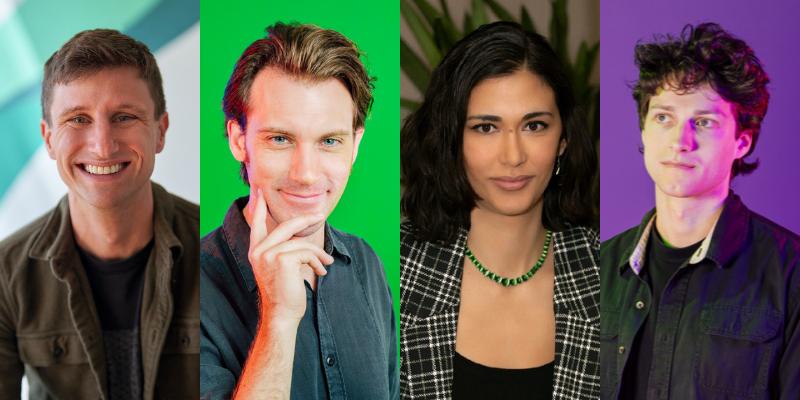
With Alex Mayyasi, Kenny Malone, Daryl Fairweather, and Jack Corbett
Town Hall Seattle and City of Seattle Office of Arts & Culture present
Seattle Artists and the Civic Imagination