Rental Partner: KUOW presents
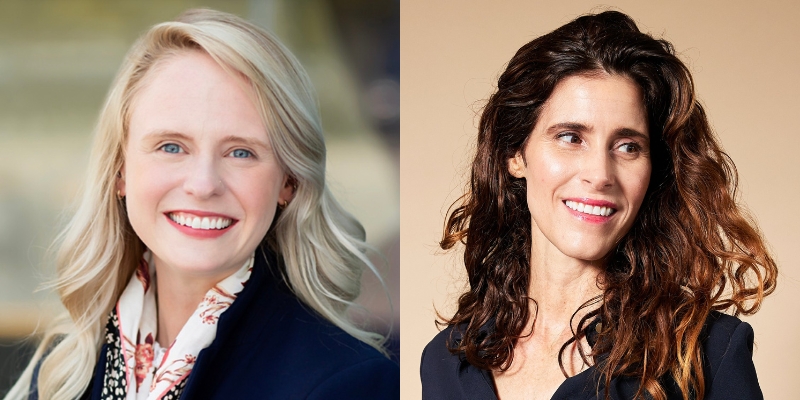
On Point Live with Meghna Chakrabarti
With Special Guest Katie Wilson


Rental Partner: University of Washington Office of Public Lectures presents
How Crip Feminist Technoscience Will Save Us
EVENT NOTES
Doors for this event will open at 5:30 PM.
BAG POLICY
There is a clear bag policy for this event and bags will be searched at the doors; see policy details below.
Presented by the University of Washington Office of Public Lectures. For questions about this event, please contact lectures@uw.edu.
In the shadow of an empire, in a world on fire, what if we could imagine — and build — otherwise? Crip feminist technoscience teaches us how to wield disabled, mad, neuroexpansive, crip, sick people’s wisdom as a vital tool for surviving now and thriving then. Disabled people know intimately how to strategically leverage legal and policy tools and know precisely the limitations of these tools and frameworks.
In a polycrisis of pandemic, late-stage capitalism, genocide, climate catastrophe, human rights atrocity, and failure of democratic institutions, we find ourselves confronted with headlines about declining productivity, increased rates of depression, AI plagiarism, and the cost of eggs. We debate about the meaning of international norms and rule of law while the settler empire is crumbling and fascism and white supremacy are growing in fertile ground. Universities are adjunctifying the professoriate, union busting grad students and dining hall workers, repressing student activism, and refusing to address the near ubiquitous use of generative AI to write papers and solve equations. Meanwhile, AI is driving innovation and acceleration of state violence from immigration enforcement to criminalization of protest to genocide. This talk will explore the promises and failures of regulating automation, algorithmic assessment, and generative AI through a framework of disability justice and crip feminist technoscience.
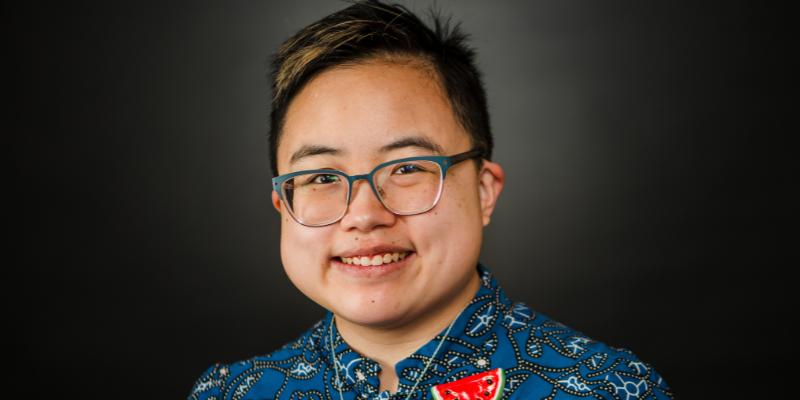
Ly Xīnzhèn M. Zhǎngsūn Brown (they/them) is an internationally recognized advocate, community organizer, scholar-activist, and movement builder whose work addresses interpersonal, corporate, and state violence against disabled people at the intersections of race, class, gender, sexuality, faith, language, and nationality. With over 15 years of experience in advocacy, organizing, and policy expertise at the nexus of disability rights and disability justice—two distinct but interconnected frameworks—they have also run for public office in Maryland. Their current research explores disability justice interventions against carceral technology and the expansion of medical-legal carceral states, disability and race in transnational and transracial adoption, and decolonizing clinical literature on obsessive-compulsive disorder. As an organizer, their political homes are disability justice and abolition; as a feminist critical legal scholar, their work engages critical race and disability theory, as well as science and technology studies.
Ly Xīnzhèn is an assistant teaching professor of disability studies at Georgetown University, where they have developed original courses on crip/mad/queer narratives, the neurodiversity movement, disability law and policy, and disability and critical race theory. They are also the founding Executive Director of The Autistic People of Color Fund, a trans-, BIPOC-, and disabled-led organization advancing disability, racial, and economic justice through mutual aid, generative economies, and just transition. In addition, they have spent several years creating Disability Justice Wisdom Tarot, a cultural project celebrating the wisdom and lived experiences of disabled people of color.
Ly Xīnzhèn serves as treasurer and past president of the Disability Rights Bar Association, Disability Justice Committee representative to the National Lawyers Guild board, and board member of Disability Power Bloc. They were recently appointed as a Commissioner on the Maryland Commission on LGBTQIA+ Affairs. Formerly, they led the only U.S. policy and advocacy project focused on disability rights, algorithmic harm, and technology justice for several years. Their co-authored research and policy report examines labor, disability rights, and emerging technologies in the workplace. Their recent publications appear in FUTURE/PRESENT: Arts in a Changing America, Disability Studies Quarterly, Autism in Adulthood, and the Disability Visibility Project.
Their work has been recognized by Amplifier’s We The Future Campaign and featured in multiple documentaries and media projects, including I Identify As Me (People of Color Productions), American Renegades (PBS), The Ride Ahead and My Disability Roadmap (LikeRightNow Films), and Persona: The Dark Truth Behind Personality Tests (HBO Max). They are a past Georgetown Gender+ Justice Initiative Fellow and a Justice Catalyst Fellow at the Bazelon Center for Mental Health Law.
Events are offered for informational, entertainment, and educational purposes only. Read Town Hall’s Program Content Policy.
In an effort to improve your safety, the University of Washington has implemented a bag policy for all public lectures held at Town Hall Seattle. This policy limits the size and types of bags that are permitted inside the venue. This policy will enhance safety at our lectures as a clear bag is easily and quickly searched.
Approved bags include clear plastic, vinyl, or PVC bags that do not exceed 12″ x 6″ x 12″, one-gallon clear, re-sealable plastic storage bags, and small clutch bags no larger than 4.5″ x 6.5″ (approximately the size of a hand) with or without a handle or strap. Prohibited bags include but are not limited to purses, backpacks, diaper bags, binocular cases, camera cases, fanny packs, luggage, seat cushions with a zipper, any bag larger than the permissible size, and any bag that is not clear.
For questions about this event, contact lectures@uw.edu.
Rental Partner: KUOW presents
With Special Guest Katie Wilson
Town Hall Seattle and Braided River present
Indigenous Knowledge in Conservation – A Journey Through Photos
Town Hall Seattle and SetSet present
With Dr. Amanda Downey and April Pride